Do you know what this world needs right now? One more person with an opinion… said absolutely no one. But seeing as everyone is likely fairly well-conditioned to folks blasting around their thoughts on controversial topics, I figure I might as well go ahead and tackle running footwear. And also, of course, because I get asked this question quite frequently in my office. So, let's get right to it, a hopefully objective look at running footwear from a physician and NOT a coach, endorser, #influencer, or otherwise.
Let’s start by fleshing out the main camps as I see them. First, the conventional runner. These are the types that we’ve all become accustomed to seeing in all of the big box-running stores over the years. These shoes generally come with a lot of bells and whistles like varying amounts of cushion, stability, “motion control” and so on. Largely, these are characterized by a sizeable cushy heel and a moderate to high heel-toe drop.
The next camp would be the zero-drop crowd, a relatively new kid to the block. These offer a similar stack height (amount of material between your foot and the ground) to many of the conventional runners however little to no heel-toe drop. Heel-toe drop refers to the offset in the stack height of the heel to the forefoot (higher in the back). Conventional runners typically float around the 6-10 mm range, a seemingly small amount. No one seems to be able to agree on why high-heel-toe drop shoes became a thing. Some think that running companies were attempting to decrease the amount of foot injury caused by heel strikes by adding in a big squishy heel. Others think that it was a performance fix and give you an edge by kicking you forward into your next step. Regardless the zero-drop shoes have done away with that concept. Most also have looked into widening the shape of the toe box, leaving more space for your toes to spread than conventional runners. They look like your Altra, Topo, Inov-8, and a smattering of individual models from the major running shoe companies.
Last but certainly not least is the barefoot movement that grew immensely in popularity following Chris McDougall’s book, Born to Run. These shoes are characterized by having a very low stack height and thus very little additional cushioning or support in the sole of the shoe. They also try to replicate the ideal anatomical correctness of the foot, especially through the forefoot, giving tons of room up front for the toes to spread out and “grip” the surface. In the case of the Vibram 5 fingers, you get even more freedom in the toes. This movement grew with such popularity that most brands now carry some type of stripped-down, bare-bones runner.
 So then, which bear is best? And boy is that a loaded question. Sidenote: I would like to preface this by saying that these thoughts may or may not mirror those of Knoxville Spine and Sports (much to Dr. Bert and Carolina’s dismay) but should be fairly close.
The simple and, perhaps, most accurate answer is that when looking into maximizing running performance and longevity of running without pain or injury, shoes have a very small if not negligible part to play in it all. It ultimately comes down to running form and technique and is your body capable of maintaining that form and technique while throwing down mile after mile? Also, the way that you treat your body as well as the habits that govern your running practice is just as pivotal. Are you warming up before and cooling down following a run? What’s your hydration status and how are your electrolytes throughout the day? Do you utilize compression during the day? How much of the day are you sitting, especially after a run? how about daily soft tissue maintenance? These factors all play a much bigger role in staying healthy while running than the type of footwear that you choose. But since this is an article on shoes, let’s get into that a little bit more.
What does a shoe do? It protects our feet from otherwise unsafe environments. It covers the bottoms of our feet and sometimes the tops as a protective measure. In the past, this is all those shoes did, and it was sufficient. Chris McDougall beats this point to death in his book Born to Run as he references the Tarahumara Indians (Native Americans? Not sure. Don’t sue me) as well as other tribes in Africa that routinely run vast distances in little to no shoes. We scratch our heads befuddled by this concept now but this is how it was done for millennia. Look at Pheidippides. He didn’t pop on his pair of Brooks Beasts to control for excessive pronation before proceeding to run to Athens. If he had shoes at all they were sandals and they likely weren’t worn throughout the entire run, but most importantly, they were sufficient.
 So then, I must be a staunch advocate of the barefoot movement and thus all shoes are the devil. Nope. Far from it in fact. I think that this is the direction that, as runners, we should all be trying to move towards but there is a panoply of reasons that keep this from being in a specific population’s best interest. Chief of which would be if you have been training in conventional runners (and as a conventional runner) for years. The biggest no-no is to go straight to a zero-drop or minimal shoe without the proper care taken to step down the heel-toe drop gradually. This also must be paired with addressing proper movement mechanics. Can you get your hips into an appropriate amount of extension? How about your ankle dorsiflexion? Does your foot maintain its arch while running? If you can’t do these things then we’ve got bigger fish to fry than what shoe to pick.
I will say this though, for the general population it doesn’t really seem like the conventional running shoe is doing us many favors. A big honker of a heel paired with a platform with a historically narrow toe box seems to have become problematic. Let’s dissect the heel issue really quickly.
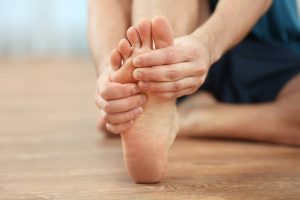 There is one population that I think could do with a considerable heel-toe drop and those are people with what’s called a rigid forefoot equinus. Meaning, that their forefoot drops below their mid and rear foot in such a manner that as they walk, a lot more pressure is applied to the forefoot as it is stuck in a lowered position. If the equinus, is supple, or “gives” as they walk, then no problem. The rigidity is the issue here and what can cause foot pain. A heel for these people helps to disperse the force throughout the foot as they walk and offload the rigid forefoot. This is a fairly rare condition and one that I rarely come across. Otherwise, the heel is doing no more than proliferating a dominant heel-strike style gait, one that has been shown to be wildly inefficient and promotes injury. It also leaves you in a position that shortens your plantar fascia, Achilles, and indeed the entire posterior chain, something that runners absolutely don’t need any help with.
So, what about stability or motion-controlled shoes? At this point, I’m sure a decent handful of you are thinking, “Well I have a flat arch and overpronate and my motion control shoe helps manage that.” And you would probably be right. However, the shoe and even a custom orthotic are no more than a band-aid in this case and do not correct the problem. In fact, the entire idea behind orthotics is to accommodate jacked-up foot mechanics to get you out of pain so that you can start to work on fixing the aforementioned foot mechanics and whatever it is that is ailing you. It’s a cast, a splint, a Band-Aid. It serves a very valuable purpose at the moment but is never intended to be a long-term fix. A motion-controlled shoe is to be approached in the same manner, a means to an end.
Now don’t hear me say that I am anti-orthotics. I have made plenty of orthotics for patients and even for my wife, but every time it has been to reduce pain quickly by offloading the tissues in question so that we could then train their weaknesses and ultimately make the orthotic obsolete. I would guess that, conservatively, 80% of the people who wear orthotic or motion-controlled shoes could get out of them with specific work to address movement mechanics of the foot and lower extremities. But it takes work. Considerable tedious, intensive work. However, the completion of this work yields a hell-raising, bomb-proof, specimen of a runner.
Lastly (and this actually is a bit of a rant. Apologies), if all of the flip-flop factories of the world spontaneously caught fire tomorrow it would by a long shot be the best thing to come from 2020. Yes, also looking at you: Hoka Recovery Slides. Anything that you have to use your toes, especially your big toe to battle to stay on your foot while walking is generally a terrible idea and is going to cause the intrinsic muscles of the arch of your foot to sizzle like a burnt-up hard drive. The last thing that any runner needs help with is a wicked case of plantar fasciitis which flip flops all but guarantee.
 So, where to start with all this? The first move would be to address your body. Do you notice that you have tight or shortened hip flexors? How about your calves? Does your arch flatten when you stand up? Has a coach or someone who knows a few things about running ever watched you run? These and other habits surrounding your running practice are the first things to address. Next, we start trying to very gradually shrink your shoe’s heel. If you normally run in a 10 mm drop, try stepping down to 6 mm using the 10% rule. Do the first 10% of the run in the new 6 mm shoes and finish it in your old pair. Then do 20% of the run in the new ones before switching to the old ones. Keep increasing by 10% each run until you are transitioned over. Then run in these shoes for the lifetime of the shoe. Do this another 1-2 times until you are running in a zero-drop shoe, all the while doing your work to address running mechanics.


430 Montbrook Lane Suite 203
Knoxville, TN
37919
Phone: 865-337-5574
Monday
7am-12pm & 1pm-6pm
Tuesday
7am-12pm & 1pm-4pm
Wednesday
7am-1pm
Thursday
7am-12pm & 1pm-6pm
Friday
7am-12pm & 1pm-4pm
Saturday & Sunday
Closed