
TMJ Dysfunction Treatment in KnoxvillePatient suffering form severe pain cause of TMJ disorder

Jaw pain shouldn't dictate how you eat, speak, or sleep. If you are dealing with constant clicking, popping, or a tight jaw that aches by the end of the day, you are likely experiencing temporomandibular joint (TMJ) dysfunction. It is a frustrating mechanical issue that often causes lingering headaches, neck stiffness, and facial pain.

At Knoxville Spine & Sports, our TMJ dysfunction treatment in Knoxville focuses on the root cause of your jaw pain. We look beyond the joint itself, assessing your neck, posture, and muscle mechanics to restore proper movement and bring you lasting relief. If you are tired of waking up with a sore jaw, a comprehensive movement evaluation is the first step toward getting your comfort back.

What Is TMJ?

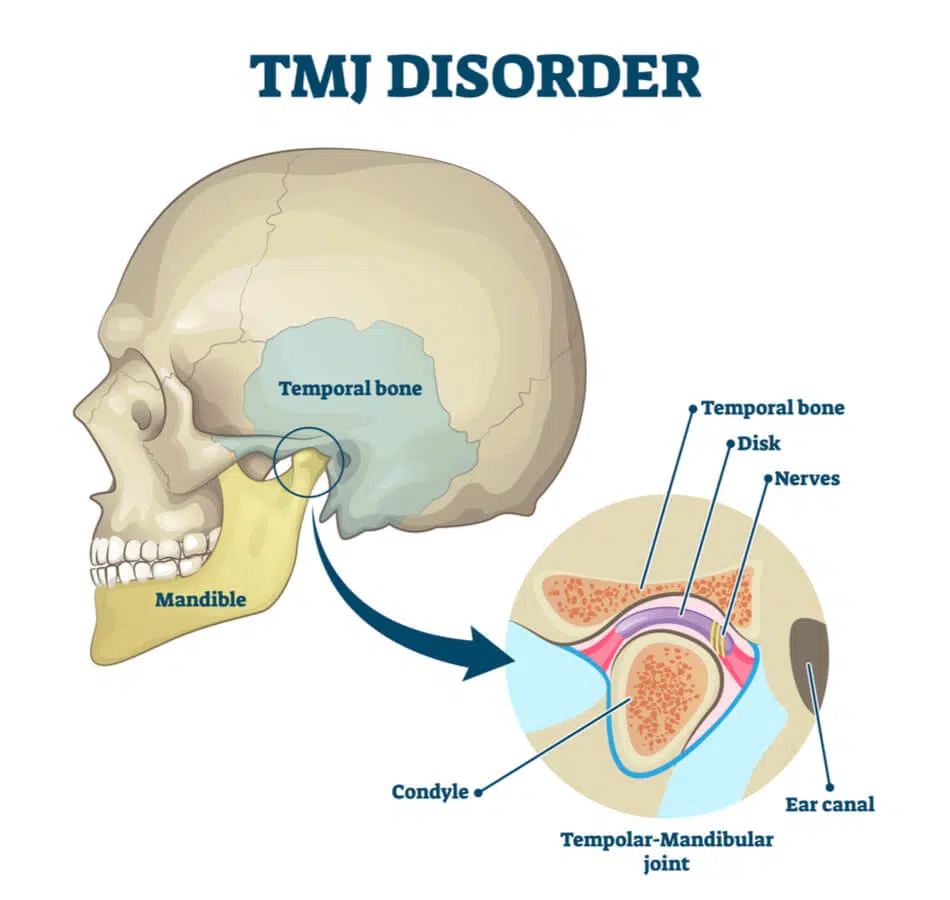
Medical illustration of a skull with a TMJ disorder

TMJ is a common term often used when someone experiences jaw pain, but what exactly is it, and what does TMJ dysfunction treatment in Knoxville involve?

The TMJ or temporomandibular joint is one of, if not the most used joints in the body. As the name implies, it is where the temporal bone of the skull and the mandible, or jawbone, articulate. 

At rest, the mandible sits in a little groove in the temporal bone called the mandibular fossa which is cushioned by disc tissue. Whenever we depress our jaw or open our mouth, the mandible is supposed to smoothly glide out of the fossa and over the disc tissue. However, this is not always the case considering it is estimated that about 10 million or more Americans struggle with TMJ-related pain or dysfunction per year, and tends to be more common in women than men. 

What Can Cause TMJ Dysfunction?

Several contributing factors include psychological stress, emotional disturbances, muscle imbalances, sleep bruxism (teeth grinding or clenching), and trigger points in the surrounding musculature. Because TMJ dysfunction is typically multifactorial, TMJ dysfunction treatment in Knoxville must be customized to address each individual’s unique combination of causes.

There are many ways to treat TMJ dysfunction depending upon the associated factors such as therapeutic exercise, manual therapy, patient education, stress management, counseling, and correction of faulty bite (malocclusion).
TMJ Symptoms You Should Watch For

Many patients do not realize their recurring tension headaches or earaches are actually originating from their jaw. TMJ dysfunction presents in several different ways, often worsening during stressful periods, after eating hard foods, or right after waking up.

Watch for these common signs of a jaw movement issue:

  • Persistent Jaw Pain: A dull, aching pain in or around the jaw joint, especially in the morning or late evening.
  • Clicking or Popping Sounds: Audible noises when opening or closing your mouth, sometimes accompanied by a catching or grinding sensation.
  • Frequent Tension Headaches: Pain radiating from the jaw muscles up into the temples and sides of the head.
  • Difficulty Chewing: Discomfort or sharp pain when biting down, eating tough foods, or trying to open your mouth fully.
  • Ear Discomfort: Ringing in the ears (tinnitus), earaches, or a feeling of fullness without an actual ear infection.
  • Jaw Stiffness and Locking: The jaw muscles feel completely rigid, or the joint temporarily locks in an open or closed position.

How We Evaluate and Treat TMJ Issues

Chiropractor is discussing the medical insurance information to the patient

Fixing TMJ dysfunction requires more than just a generic nightguard or a quick adjustment. Your jaw is a complex joint that relies heavily on the alignment of your neck, upper back, and surrounding musculature.

Here is what your rehab journey looks like at our clinic:

  • Comprehensive Movement Assessment: We start by listening to your symptom history and closely evaluating how your jaw opens, closes, and shifts during normal movement.
  • Physical Examination: We assess the muscles inside and outside the mouth, check your cervical spine (neck) mobility, and identify any active trigger points contributing to your pain.
  • Personalized Treatment Plan: Based on your specific mechanics, we build a care plan combining chiropractic adjustments, targeted soft tissue therapy, and corrective exercises.
  • Progress Tracking and Rehab: We monitor your jaw's range of motion at each visit. We continually progress your active rehab to strengthen the muscles and stabilize the joint for the long term.

Why Seek Treatment? Benefits of TMJ Dysfunction Treatment

Ignoring jaw dysfunction usually leads to increased muscle tension and worsening pain over time. Proper rehabilitation focuses on restoring normal joint mechanics and releasing the muscular trigger points that are locking the jaw in place.

Targeted TMJ care provides several functional benefits:

  • Reduced Jaw and Facial Pain: Alleviating the constant, exhausting ache in your jaw muscles and surrounding facial tissues.
  • Restored Jaw Function: Gaining the ability to chew, talk, and yawn comfortably without fear of the joint locking or catching.
  • Fewer Tension Headaches: Decreasing the frequency and intensity of headaches caused by referred pain from tight jaw and neck muscles.
  • Better Sleep Quality: Minimizing nighttime clenching and pain, allowing your body to get deeper, more restorative rest.
  • Decreased Neck and Shoulder Tension: Releasing the interconnected muscles in the upper cervical spine that almost always tighten alongside the jaw.
  • Long-Term Relief: Equipping you with specific home exercises and posture strategies to prevent symptoms from returning.

Why Choose Knoxville Spine & Sports for TMJ Care?

We approach jaw pain through the lens of sports medicine and functional movement. This means we treat the whole kinetic chain rather than just attempting to mask the localized pain.

  • Integrated Care Model: You receive a seamless blend of chiropractic care, physical therapy techniques, and soft tissue mobilization all under one roof.
  • Root-Cause Philosophy: We do not just look at the jaw. We evaluate your neck, upper back, and daily posture to find exactly why the temporomandibular joint is overloaded in the first place.
  • Clinical Expertise: Our practitioners have extensive experience in musculoskeletal rehab, effectively treating everyone from desk workers with chronic tension to active athletes dealing with performance-limiting pain.
  • Individualized Solutions: Your TMJ mechanics are entirely unique to you. Your treatment plan is built specifically for your body, your lifestyle, and your functional goals.

Ready to stop letting jaw pain interfere with your daily life? Reach out to our team today to schedule an evaluation and start your recovery process.

How To Prevent TMJ PainPatient suffering form severe pain cause of TMJ disorder

To support long-term relief following TMJ dysfunction treatment in Knoxville, patients are encouraged to adopt jaw-friendly habits, such as:

  • Not biting nails
  • Not excessively chewing gum
  • Not leaning on the chin
  • Eating a softer diet and avoiding caffeine
  • Chewing bilaterally or alternate sides
  • Avoid clenching, biting, gum chewing
  • Avoid stomach sleeping to minimize strain on the jaw
  • Using heat or ice over tender muscles

Due to the high incidence of TMJ problems, you or someone you know may be experiencing this complaint. Please consider consulting a chiropractor or physical therapist about your concerns and how they can aid you in healing.

Find Relief from TMJ Pain and Jaw Dysfunction

With over 15+ years of experience, Knoxville Spine & Sports has the expertise to alleviate your pain to get you to optimal health and peak performance. We specialize in various therapies, techniques, and treatment options including chiropractic, physical therapy, dry needling, strengthening & corrective exercises, and more. Call our office today at (865) 337-5574 to book an appointment for TMJ Dysfunction treatment.

Frequently Asked Questions About TMJ Dysfunction

What are the most common symptoms of TMJ dysfunction?

What causes TMJ dysfunction?

How is TMJ dysfunction diagnosed?

What treatment options are available for TMJ dysfunction?

How long does it take to recover from TMJ dysfunction?

Can TMJ dysfunction be prevented?

When should I see a professional for TMJ dysfunction treatment?

  • Contact Us

    430 Montbrook Lane Suite 203
    Knoxville TN 37919
    United States
    Phone: (865) 337-5574
  • Office Hours

    Monday
    7am-12pm & 1pm-6pm
    Tuesday
    7am-12pm & 1pm-5pm
    Wednesday
    7am-1pm
    Thursday
    7am-12pm & 1pm-6pm
    Friday
    7am-12pm & 1pm-4pm
    Saturday & Sunday
    Closed

  • © Knoxville Spine & Sports 2018 - 2022
    Developed by M.D.R. Marketing Done Right
    contact information

    430 Montbrook Lane Suite 203
    Knoxville, TN
    37919
    Phone: 865-337-5574


    office hours

    Monday
    7am-12pm & 1pm-6pm
    Tuesday
    7am-12pm & 1pm-4pm
    Wednesday
    7am-1pm
    Thursday
    7am-12pm & 1pm-6pm
    Friday
    7am-12pm & 1pm-4pm
    Saturday & Sunday
    Closed

    crossmenu
    linkedin facebook pinterest youtube rss twitter instagram facebook-blank rss-blank linkedin-blank pinterest youtube twitter instagram